Showing posts with label mobile app development. Show all posts

Tuesday, 22 August 2017

Roundup of The Best Technologies in Mobile App Development


The technologies in mobile app development companies are changing like anything. Right from the designing to the development and to the use of the technologies, the story is totally different today. From a user’s point of view, it is important to understand the potential of a mobile app development technology so that the next time you decide to develop an application, you make the best choice.

When it comes to choosing the app development platform, the choice for a user is available in a huge number. However, the thing that matters here is the utilization of the best technology, which generally depends upon the particular requirement of an application. And, this is possible only, when you have the complete knowledge of different mobile app platforms. Let us guide you down the road and give a glimpse of the most trending mobile app development techniques.

Native Mobile App Development

“Native” is the mobile app development way today. It is one of the most utilized technologies by mobile app development companies. Mobile apps are designed to be native to get a number of benefits. The technology offers exceptional app functionalities that elevate the overall potential of the application.

The good new about Native as a mobile app development technology is that it customizes the user experience. The apps developed with Native mobile app technology operates quickly along with providing an exceptional user experience.

Hybrid Mobile App Development 
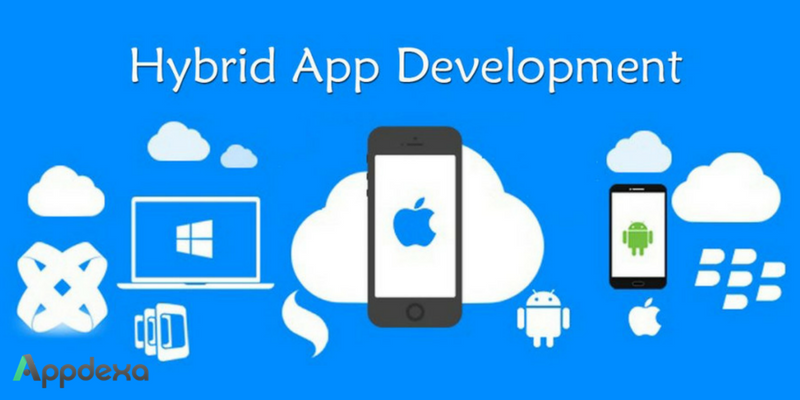


Hybrid apps are easy to install and can run on a host of devices. Hybrid mobile app development uses HTML5 as the programming language. And, with the same reason, the process of hybrid mobile app development is favorite to top mobile app developers. More to this, it streamlines the development process drastically. With Hybrid apps, the developers do not have to create an app for every single platform. And, this, of course, saves their time and the efforts.

Traditional Web Apps

Web apps are developed with the most popular programming languages. However, one restriction with web apps is that they can’t utilize the hardware on the devices. Additionally, they can only be used by the web browsers and this limits the number of users for this specific platform.

Now Let’s Have A look on the Best Frameworks Available for Mobile App Development:

PhoneGap


PhoneGap is one of the most used frameworks by top mobile app developers. The framework is utilized to develop apps for Android, Blackberry, iOS and other such devices. It uses HTML and JavaScript alike.

Appcelerator

The framework helps top mobile app developers in native mobile app development. The best thing about Appcelerator is that the developers can customize the elements and the functionalities of an application with it.

The Bottom Line

Mobile app development is one such domain that is growing with a lightening speed. And, mobile app development companies are playing their best role in the same. It is also because of the amazing technology that developers are able to design apps with exceptional functionalities.

Tuesday, 15 August 2017

How to Increase Sales Through Deep-Linking in Mobile Apps


Gone are the days when it was all about hyperlinking in order to take your readers to the specific articles, blogs, or the web pages. Now deep-linking has come into the practice, which is really helping a number of Android app development companies to grow their sales. As deep-linking helps the users reach to specific pages, they are also liking this approach.

The deep-linking practice has grown among the best mobile app development companies in the past few years. As every mobile user expects to reach to desired page after a single click only, the approach is becoming much and more preferable both for the companies as well as for the users too. Let’s walk together to get into the depth of the deep-linking.

The Prospects of Deep-Linking

Users do not have the time to browse through a host of links in order to reach their desired destination. They want a specific link that takes them to the page they have been looking for. Here comes the effectivity of deep-linking that mobile app development company practices. Deep-linking has been proved an effective one for both the posts images as well as for the images too in order to promote them among the audiences.


The Benefits of Using Deep Linking

With deep-linking, Android app development companies can make a number of benefits. And, the most important ones are:

  • Increase in the user efficiency
  • Ensuring that the users are not directed to any other page
  • An exceptional formula to keep the user’s interest alive
  • Adding on to the visibility of the specific pages
  • Helps to increase the sales for the mobile app development company
  • Best mobile app development companies can also use the tactic to promote their specific product or services
  • An increase in the sales by providing direct link to the specific page
  • More and more customer engagement

Why Does A Few Apps Practice Deep-Linking

The deep-linking process for Android as well as iOS apps differs from one another. The process needs a manual effort and that is why it is not performed so frequently by Android mobile app development companies. Moreover, it is not only to create the deep-linking manually but also to create different codes for the same, which consumes a lot of time as well as the efforts.

Deep-linking plays an important role in enhancing the brand image, which helps mobile app development companies to increase their sales. As the approach makes the navigation much easier for the users, it becomes easy for them to land on the desired pages.

In Conclusion

Practicing deep-linking offers an amazing chance to the mobile app development companies to gain maximum profits from the users. The approach helps the companies to create a strong database and the market presence as well. Thus, using deep-linking can be the ultimate solution for maximizing brand presence.

Tuesday, 18 July 2017

Microservices: Indispensable Approach to Mobile App Development


In today's highly competitive market, it is very important for your company to quickly react to the changes that takes place around you. However, the saddest thing is that your apps which were once high-performing are now turning to monolithic legacy apps. It is crucial to address the fact that enterprises used to rely upon proprietary apps long before smartphones became ubiquitous. These apps include CRM, ERP, medical records, database apps and many more. Any kind of change to these monolithic mobile app development needs time-consuming and costly redevelopment. In addition, there will be a need of redeployment of server-side code and testing.

On the other hand, you cannot get rid of these apps or cannot start from scratch. You should note that your apps become too huge for several other Mobile App Developers to completely understand. As a result, incorporating new features or fixing bugs becomes tough. Now, the million dollar question is how to adopt the lean development practice by avoiding the risk and cost of re-developing? The solution is to opt for Microservices that are emerging as an architectural design pattern that offer agility as well as scalability to apps with the help of cloud platform and Technology.

How can Microservices Approach Make Mobile App Development Easier?

Allow Independent Release

There is no denying that there are different components that runs the whole system and different mobile app developers work on different parts of the system. In a monolithic system, deployment of a component separately is tough. However, with Microservices approach, you can have independent releases as well as deployment of components. The best thing is that each service of the component can  be tested and deployed quickly. Moreover, testing of smaller bits of codes and continuous deployment can be easily done .

Less Mobile App Development Cost 


It is believed that overtime this approach decreases the cost of mobile app development. If there is a need to rebuild or upgrade a Microservice, you don't have to redevelop the entire app. You just have to work on the part that needs modification.

Hassle-Free Scaling 

Different components of mobile app development have different requirements. There is nothing wrong in saying that some functionalities need more memory, whereas some require more computational resources or database access. In addition, some may need third party services or increased network bandwidth. When you are using Microservices architecture, you can put components in an appropriate environment so that they can scale properly.

Outages Don't spoil The Whole System 

In monolithic applications all modules run within the same process. If there is any kind of error in any module, then this brings down the whole process. However, Microservices are built and deployed independently. When there is outage in one area then the whole system will not get affected. You can even continue providing qualitative services through an outage.

Wrapping Up

A large number of Mobile App Development Companies are adopting Microservices Architecture pattern because of being the best choice for complex mobile app development services. Experts see Microservices as a revolutionary technology. Now, you have an option of reaping utility as well as value from this amazing and innovative way of building mobile apps.

Wednesday, 5 July 2017

What 2017 Has in Store for Enterprise Mobility


Enterprise mobility is continually growing in mobile app development domain. The mobile-first strategy is in the to-do list of every company today in order to reach easily to the audience in an effective way. While mobile-first strategy has helped a number of companies to provide major offerings to the mobile app development companies, now the approach is going majorly towards mobile-only approach.

In order to be more specific in their approaches, Mobile App Development Companies are now focusing on mobility evolution management. Now that smartphones are used more frequently, mobile phones along with enterprise apps can help companies get better leads from the users. The requirement is to get most out of the development approach.

Contribution of Enterprise Mobility to Change the Business Scenario

2016 was the year of some of the great innovation wherein enterprise mobility grew exceptionally well. As the technology is growing in 2017, the year has already promised major innovations in the field of mobile app development. There is no denial from the fact that there has already been the penetration of the smartphones in the businesses today.

Mobile apps are playing a major to let the users connect with the services and the mobility apps take them a step ahead. There was a major shift in the working culture when everything shifted from paper to the computers. Now that mobility is bringing a medium to the people to connect instantly to the businesses and the services, the users are making the most out of the same.

Enterprise Apps in the Business


Enterprise apps with the goodness of cloud apps offer quick and simple solution for a number of business concerns. The most important benefit comes with the fact that remote support becomes much easier. Additionally the work becomes more practical when the users can get the benefits easily and directly from the mobility solutions only. Because of the reason, mobile app companies are more than ever concerned for investing in the enterprise app solutions.

Technology in the Enterprise Mobility Solution

The Cloud Computing

The biggest advantage of shifting to the cloud computing is the storage capacity that apps get with this technique. In addition to this, cloud based solution in accordance with enterprise mobility solutions offers easy data synchronization facilities. Moreover, the app handling and data managing gets a bit easier, which is of course a benefit for the business.

Smart Apps with AI

The future of Enterprise Apps is going to be more promising with AI in enterprise application. The techniques helps in embedding machine learning in the applications and because of this reason such apps get easy popularity. As SIRI, the intelligent Apple assistance has made its own place in the apps domain, enterprise mobility is sure to grow in this way also.

The Conclusion

Enterprise applications are the future of mobile application today. The Technology is one prominent and now a number of mobile app development companies are focusing on the same to get more business from the users. Thus, enterprise mobility promises for result-oriented services.

Tuesday, 27 June 2017

An Insight Into The World Of Media Apps


 Media app streaming is the new buzz in the Mobile App Development industry. Smartphone users are now glued on their phones more than ever, which offers an exciting opportunity to the companies to develop such applications. Such applications have made their own appeal among the audiences as they provide a personal viewing experience to the users.

Small screens are preferable when it comes to getting an exceptional user experience from the applications. The tentative number of smartphone users by the end of 2020 is expected to grow 6.1 billion. This means nearly 70% of total population on earth will have its own medium of communication  in the form of mobile phones.  

This is an exciting news for all the Mobile App Development Companies out there in the market. An exceptional app browsing experience from these companies could help in elevating the overall experience of the users. And, an exceptional user experience could count for the complete success of the application.


The Parameters to Develop Quality-Centric Media Apps

The Quality of Visual Content

The quality of the streamed content matters a lot. The aim is to keep the users engaged in the videos, which is possible only when the video quality is up to the mark. Additionally, the quality of streamed content depends upon a number of factors including, frame, screen resolution, the network connectivity and much more to it. Encoding of the programmed app also matters when it is about elevating the quality of visual content.

Embedding VR in The Media Application


The world is getting more close to Virtual Reality today. Users daydreaming is now scaling up to the reality with a simple box taking up the users to a whole new world. Because of the same reason, the visual media applications are getting a huge popularity among the users. A lot of media app development companies are now investing in the same direction.

The Role of Technology
  
It is of course the adoption of improved technological tools and innovative methods that we are able to experience the exceptional benefits. There are a number of improved tools that we use today for experiencing the apps through its best versions. As the developers have got access to the best app development and designing tools, it is easier for them to create the innovation with media apps.


Netflix on Mobile Apps

Netflix presents one of the finest examples of video streaming. It has managed it extremely to deliver the content of great quality. The content is streamed greatly on a range of mobile devices. Such an streaming has become possible only because of encoding practices in order to optimize the videos.

In The Conclusion

For now, the media apps industry is growing prominently. The inclusion of the latest Technology is helping it more prominently to develop like never before. With the use of such innovative methods, there is a long way for these apps to grow in the future. And, there is no denial from the fact that media apps will become the best medium to reach to targeted audience.

Tuesday, 6 June 2017

A Sneak Peak Into Real World Mobile Applications Example Of IoT


The scope of creation is continually growing with evolution of exceptional techniques such as Internet of Things in Mobile App Development space. We humans have already initiated a never ending approach towards a vision to make machines smarter enough to reduce the human labor almost to nil. And, the vision has got real in the form of Internet of Things enabled applications. 

The implementation of idea (inter-connected devices) has now become a possibility owing to the revolutionary IoT technique as well as Cloud-Based Technology. Both these techniques have helped companies to offer some of the smart applications to the users. These devices have, no doubt made our lives easier to a greater extent. They have helped in making the lives easier and our homes smarter.

The Impact of IoT   


The wave of connectivity through IoT has moved beyond our homes (smart devices), laptops and smartphones. It has now reached to cars, connected health services, wearables and much more. The basic aim behind the expansion of this technique is the urge to remain connected to the services all through the day. The scope of connectivity is growing with such a tremendous speed that it is predicted to reach nearly to $20 billion by 2020. Here is a graph that shows the tremendous increase in this technology.


With IoT enabled devices, we are moving towards a virtual world that has got 24*7 connectivity. The technique is also helping in bridging the gap between digital world and the users. These innovations are taking us to a fully automated world where connectivity means everything. Let’s now unleash with us the real world mobile app examples of Internet of Things.

1.Wearables

The demand of wearables is a proof to the popularity of the visionary Internet of Things technology. Giant companies such as Google, Samsung, Amazon, Dell and many others have invested hugely in this technique. Wearable devices collect information and data about the users to provide the essential details about their health. These devices have majorly covered, health, fitness and entertainment sector.

2. Smart Cities 

Smart cities are yet another powerful example of Internet of Things. The concept is already flourish in many metropolitan cities to offer much ease to the users. Right from smart surveillance to gen next energy management system and to automated transport, smart cities are becoming a big reality today. With smart cities the scope of IoT is growing exceptionally well.


3. Smart Homes

Won’t we love to have such a home that may control the temperature on its own, can manage the lighting and the locks? We would love to reside under such a heaven, won’t we? With the increasing use of IoT, the concept of smart homes is now a reality. Automated locks, pre-programmed lightings, ACs and smart-sensing home devices are some of the examples that use IoT.

4. IoT in Healthcare

IoT in Healthcare has got great potential. This revolutionary technique is helping patients as well as medical professionals to have a great luxury in opting for healthcare facilities. Cloud based devices along with utilizing the goodness of IoT has helped mobile app developers create amazing apps. These apps have made it really easy to deliver services to the patients.

The Verdict 

Internet of things, as explained earlier is an amazing technology. And, as the developments are going, IoT will become more prominent. The future of IoT is much more promising and it is sure to connect a billion of things together contributing towards a world that is ever-connected.

Tuesday, 23 May 2017

How MBaaS Is Changing Mobile App Development Scenario


Modern mobile app development companies have certainly given a major push to the app development technique. It is also the technology that has contributed much towards the same. Addition, a number of new techniques/approaches have also been rolled out for developers that help them create innovation at the work.


Modern applications easily entice users as they have got sleek user-interface and robust backend. These apps have cloud-based backend service, which makes it easy to access the app from any of the devices. Owing to the modern complexity in the app the development process is also getting a bit complicated. Nearly 80% of developer’s time is consumed in developing the backend only.


MBaaS or Mobile backend as a service is the solution to start your app development through a simple procedure. It helps developers create a strategy so that they can focus on fast and quality app building strategy. It also helps them add exceptional security measures that could protect the application development procedure. The work is done by reusing the proven backend services through unified integration methods.


Let’s Explore More Benefits of Using MBaaS in Mobile Making
The Productivity 

It is now easy to deploy MBaaS in the cloud as per the need of the project. There is no standard measure of what should be used in MBaaS, but the following are some common MBaaS references:
  • Social network integration  

  • Push notifications 

  • User management 

  • Usage analytics

  • File and data service

These are the basic service for all modern mobile apps. With MBaaS, development time for backend services in all these categories reduces drastically that is, of course, going to help the developer in the end. Additionally, the services provided are well-tested that is again a benefit.
  
The Flexibility

Leading MBaaS service providers offer advanced SDK or software development kit. It helps developers create the app quickly through inexpensive methods. These services along with mobile AI solutions helps in maintaining the flexibility when the application is being developed. 

The Agility

Tradition app development methods follow end to end development right from backend to the front end. With MBaaS, the developers are not required to focus on developing the
infrastructure from the scratch as the infrastructure is automatically provisioned, prebuilt and tested. It, of course, saves the development time.  

In The Conclusion 

In short, there are a plethora of advantages that MBaaS leverages for mobile app development. And, the approach is one ideal for developers instead of trying to build everything on their own. For developers, it is just amazing to try this innovative platform and add more towards an advanced mobile app development approach.